

 https://www.freunde-tau.org/wp-content/uploads/93ecdb8be485036dd893603412ff19ef_2.jpeg
TAU’s “For a Righteous Cause” report explores a global trend in Holocaust commemoration centered on the Righteous Among the Nations.
Ahead of International Holocaust Remembrance Day, the Center for the Study of Contemporary European Jewry at Tel Aviv University is publishing, for the fifth year, the “For a Righteous Cause” Report, which examines initiatives and activities around the world to preserve Jewish heritage, commemorate the memory of the Holocaust, and combat racism and antisemitism. The report, comprising 104 pages, has received broad international attention.
A Central Trend: Remembering the Righteous Among the Nations
A central article in the Report determines that the most prominent trend in Holocaust commemoration worldwide over the past two decades, which strengthened in the past year, is the establishment of museums and exhibitions dealing with the stories of the Righteous Among the Nations—heroes who risked their lives and the lives of their families to save Jews from extermination; some of them saved hundreds, and tens of thousands of Jews living among us today owe them their lives. According to the article, this is the case in Japan, where the two main Holocaust remembrance museums deal with the figure of Chiune Sugihara, the Japanese diplomat who saved hundreds of Jews; in Latvia, where the main Holocaust commemoration museum focuses on the figure of the Righteous Among the Nations Jānis Lipke, who exploited his work in the German air force to save hundreds of Jews and hid Jews in a bunker he built under his home at the risk of his life; and in Czechia, where in May 2025 the “Museum of the Survivors” opened on the ruins of the factory in which Oskar Schindler employed about 1,200 Jews and brought about their rescue. Alongside an exhibition about Schindler, the museum presents testimonies of Holocaust survivors.
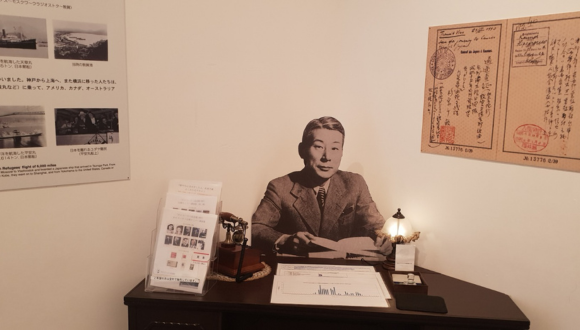
Chiune Sugihara display at the Holocaust Education Center in Fukuyama, Japan, September 2025
Additional examples include museums and exhibitions in Tennessee in the United States, in Bulgaria, in China, and in the United Arab Emirates. In Tennessee, a new exhibit at the local university deals with the legacy of the American prisoner of war Roddie Edmonds, who refused a Nazi order to identify and separate Jewish prisoners of war from the rest of the soldiers. In Shanghai, an exhibit at the “Jewish Refugees Museum” focuses on the work of the Chinese diplomat Feng Shan Ho, who issued life-saving visas to Jews. In Bulgaria, the reconstructed home of the former deputy speaker of parliament, Dimitar Peshev, is open to the public, and visitors learn about the actions he took to prevent the deportation of 48,000 Jews in Bulgaria in March 1943.
According to Prof. Uriya Shavit, Head of the Center, “The spotlight turned toward the Righteous Among the Nations is welcome—as a lesson in humanity, in humanism, and in the ability of individuals to rebel against tyranny and do good. But it is important that the story of the Righteous Among the Nations be learned in context, and not as a blurring of the past. Rescuers of Jews were the very rare exception during the Holocaust.”
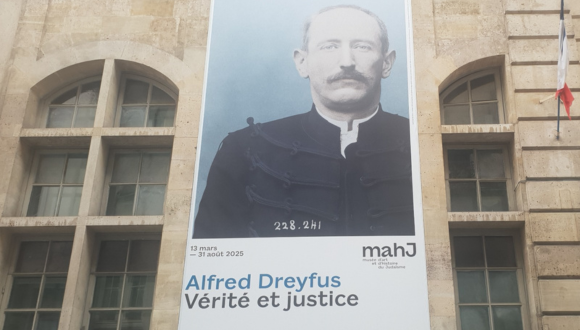
Alfred Dreyfus exhibition at the Musée d’Art et d’Histoire du Judaïsme, Paris, France, August 2025
Dr. Carl Yonker, the author of the article and the Project Manager of the Center for the Study of Contemporary European Jewry, said: “Educators need to ensure that students arrive at museums and exhibitions that focus on the Righteous Among the Nations only after they have received significant guidance on the history of antisemitism, of Nazism, and of the Holocaust. It is more convenient for educators to deal with the good rather than the bad, but there is a real concern that the focus on rescuers will blur the harsh historical reality.”
In the policy recommendations in the article’s conclusion, the Center calls on the Israeli education system to determine that in every classroom in Israel, time will be devoted, ahead of Holocaust Remembrance Day, to studying the story of one Righteous Among the Nations, “as an expression of gratitude and of the power of individuals to repair the world.”
The report also analyses in a lengthy article France’s recent and little noticed decision to establish a national day of commemoration in honor of Captain Alfred Dreyfus each July 12, marking the 1906 Court of Cassation decision that annulled his treason conviction. Standing alongside France’s four other main civic and military national holidays, French President Emmanuel Macron declared the new national day to be “a victory of justice and truth against hatred and antisemitism,” and urged that today, more than ever, people must be vigilant and persevere “against these old antisemitic demons.” The report explains why such a victory is debatable, and stresses that the Dreyfus Affair is still a source for great public interest because it reflects the ongoing controversy about its identity and direction.
Other articles in the “For a Righteous Cause” Report deal with King Charles III’s relationship to Judaism, and with the flourishing of Judaica philately. An extensive roundtable discusses Stefan Zweig’s relationship to Judaism and Zionism and the reasons for his literary renaissance in contemporary Israel. The central article in the booklet, pointing out that Muslim immigration is not a primary factor in anti-Israel sentiment in Europe, was published about a month ago in an early publication and stirred lively public debate.