

 https://www.freunde-tau.org/wp-content/uploads/חייל-580.jpeg
Joint study by Tel Aviv University, the IDF Medical Corps, and the U.S. Department of Defense confirms and strengthens earlier findings
A joint study by Tel Aviv University, the IDF Medical Corps, and the U.S. Department of Defense has found that a series of specialized computer-based training exercises can significantly reduce the risk of post-traumatic stress disorder (PTSD) among IDF combat soldiers. The new study confirmed and extends similar results obtained in a comparable trial conducted in 2012. Unfortunately, the program that was created as a result of this earlier study and implemented by the IDF in 2018 was shut down shortly before the outbreak of the Iron Swords War following budget cuts and restructuring in the army’s Mental Health Department.
A Second Large-Scale Confirmation
The new study, involving 500+ soldiers from one of the IDF’s regular infantry brigades, was conducted in 2022–2023 (before the outbreak of the war) under the leadership of Prof. Yair Bar-Haim, Director of the National Center for Traumatic Stress and Resilience and member of the School of Psychological Sciences at Tel Aviv University, together with doctoral student Chelsea Gober Dykan. The results now appear in the American Journal of Psychiatry, one of the world’s leading journals in the field.
Prof. Bar-Haim explains that the computer-based training involves a simple task in which soldiers are shown both neutral and threatening images or words that are replaced by target shapes that appear on the screen near those stimuli. The soldiers are asked to identify the targets, a process that gradually trains them to direct more attention toward potential threats in their environment. Each session lasts about ten minutes and is completed individually, four times over separate days.
The earlier study, conducted in 2012, tested the effectiveness of the training among roughly 800 soldiers in one of the IDF’s infantry brigades. The soldiers completed the computerized training during basic training. In the summer of 2014, during Israel’s Operation Protective Edge, most of those soldiers saw combat. Four months after the fighting ended, Prof. Bar-Haim and his team found that 7.8% of the soldiers who had not received the training were diagnosed with PTSD, compared with just 2.6% among those who completed the training program.
Testing Original vs. Revised Training Protocols
Prof. Bar-Haim, Chelsea Gober Dykan, and their research team recently set out to replicate the earlier findings and reevaluate the training’s effectiveness, this time using slightly modified computer-based protocols. This study was conducted in 2022–2023 (before the outbreak of the Iron Swords War) at the brigade training base during advanced training. One-third of the soldiers received the original attentional training protocol, another third underwent a revised attentional training protocol, and the remaining third received placebo training. After completing their training, the soldiers were deployed on their first operational rotation in Judea and Samaria. Upon their return, the researchers assessed the impact of the different training protocols on the soldiers’ risk for developing PTSD.
The results were once again clear-cut. Among soldiers in the control (placebo) group, 5.3% reported clinically significant post-traumatic symptoms, compared to 2.7% in the group that received the revised attention-training protocol, and less than one percent (0.9%) among those who completed the original attention training version. The results show that the original protocol remained the most effective in reducing the risk of PTSD, while the revised method demonstrated lower efficacy.
“Replication of findings is a critical component of clinical science and provides confidence in the validity of results,” explains Prof. Bar-Haim. “We once again found that the attentional training we developed is effective in reducing the risk of PTSD among soldiers deployed on operational settings, which further strengthens our confidence in its impact – that’s the good news. However, we also saw that the additional method we tested, based on eye-tracking technology, proved to be less effective. That’s how it is in science: our hypotheses don’t always hold up under rigorous testing, and we therefore must draw conclusions accordingly and refine our tools through further research.”
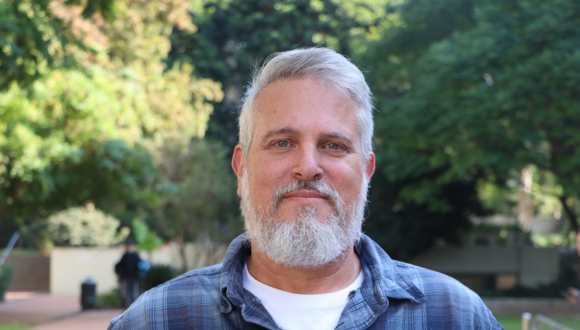
Prof. Yair Bar-Haim, Head of the National Center for Traumatic Stress and Resilience
Program Discontinued Before the War
Prof. Bar-Haim notes that the less encouraging news is that the program was discontinued several months before the outbreak of the war, and thus was not available in its most potent and tested form to soldiers heading into the Gaza and Lebanon campaigns. To still provide some form of support ahead of the ground maneuvers in Gaza and Lebanon, the researchers, together with the IDF, developed a mobile application that allows soldiers to complete the training on their personal phones rather than at designated computer stations. The app, called “Combat Attention” (Keshev Kravi), was distributed to both regular forces and reservists prior to the start of the ground operation.
According to Prof. Bar-Haim, the new findings not only reinforce confidence in attentional training as an effective tool for building resilience and preventing PTSD among combat soldiers, but also can serve as a wake-up call to military decision-makers to reinstate the program at brigade training bases and expand its use across combat units.
Prof. Bar-Haim concludes: “The study was conducted before the war when soldiers’ operational activities where typical to the low-intensity combat experiences at that time. The results demonstrated significant differences in PTSD risk between soldiers who underwent the computer-based training and those who did not, rendering the program valuable during routine deployments. It is likely that in wartime, these gaps become even more pronounced, making attentional training even more desirable. During wartime, armies typically reach their peak operational capabilities, and the same often holds true for mental health care and prevention efforts. Now, as the war subsides, the greatest challenge for the IDF is to preserve and sustain these hard-won capabilities, ensuring they are not lost in quieter times when their importance may seem less urgent. Decision-makers are urged to act now to allocate the necessary budgets and design long-term evidence-based solutions for PTSD prevention and mitigation among deploying troops.